President Jayna Amadasun delayed gonging the meeting start until 12:07 and there were 14 persons in attendance including our Guest Speaker Dr. Tanyss Munro. We were graciously welcomed by our Leader, who began our time together by sharing our Club's Land Acknowledgement Statement. Gail Bradley was invited to lay her selected Words of Wisdom on the group - and the wise.words came from one Zig Ziglar. In addition Gail, filling her Acting CRFC role shared a Rotary Foundation moment, which reflects our members support of ‘Our Foundation’. A big thank you from, Gail.
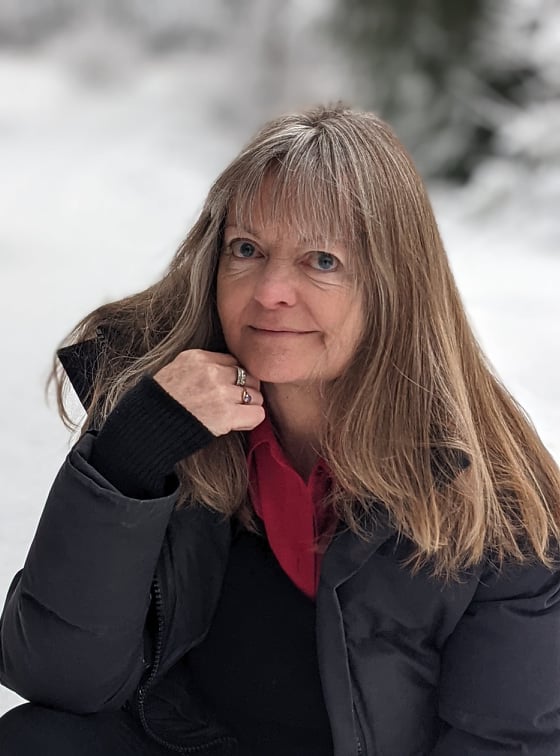
Tania Woroby, is our Club's connection with the Amarok Society, and was asked to introduce us to Dr. Tanyss Munro our Guest Speaker and this is some of what we learned.
Dr. Tanyss Munro, with her husband, best-selling author Gem Munro, has devoted her life and career to improving educational opportunities for marginalized communities. From remote Arctic Indigenous communities as principal and director of education. To Ottawa as senior advisor with federal Ministers. Then to Inter-govern-mental work around the world with the Commonwealth of Learning directing the Good Governance branch.
Then for the past two decades, Tanyss Munro has focused her efforts in the sprawling megacity urban slums. Why, you ask? “Because that’s where millions of children are growing up without basic literacy, putting themselves and their societies at grave risk.” Since early 2006, she and her husband have delivered education to tens of thousands of children without access to education – through neighbourhood mothers. For their work, they were recipients of Queen Elizabeth II Diamond Jubilee Medal.
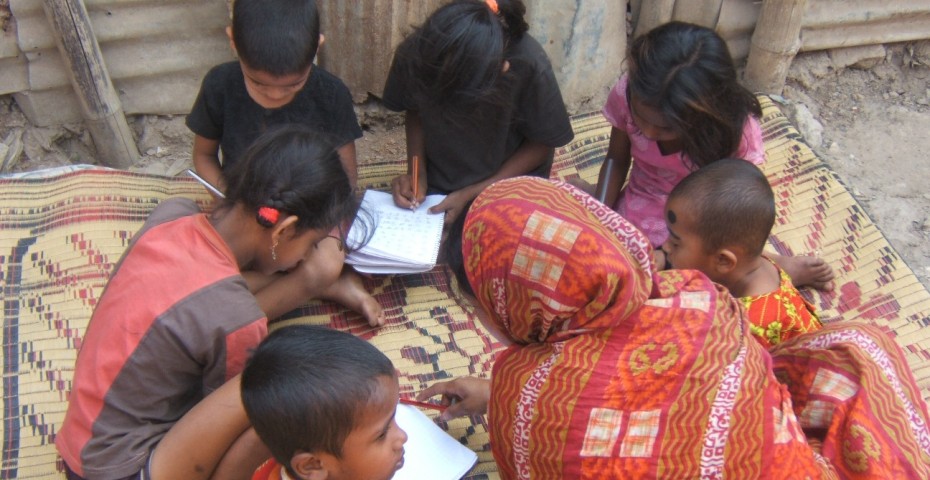
With the use of Power Point slides Tanyss Munro opened our eyes to the power and influence education has in the slum’s where they function. Often the examples Tanyss shared were far beyond teaching the children in the micro school. Our mother-teacher Sathi, chose to adopt her motherless nephew, to save the child from being sent to an orphanage and an unimaginable future. Prior to becoming a mother-teacher Sathi would not have thought about this as an option. Things like putting in place measures stopping a father from marrying off his daughter to an older man, so he had one less mouth to feed. We learned that although in Bangladesh India and Uganda it's against the law for children to be married before they reached the age of 18, in the slum the law does not matter.
We learned that 7 out of 10 children born in low- and middle-income countries cannot read or write. The Amarok schools teach classes of 25 mothers and each of those mothers will then teach five neighbourhood children and most of these 5 children will get into a junior school in the community. This is a massive change in a slum community. Out of the five children one will graduate from college. Out of five children one of them will go on to a university education. Children in these micro schools teach their younger brothers and sisters.
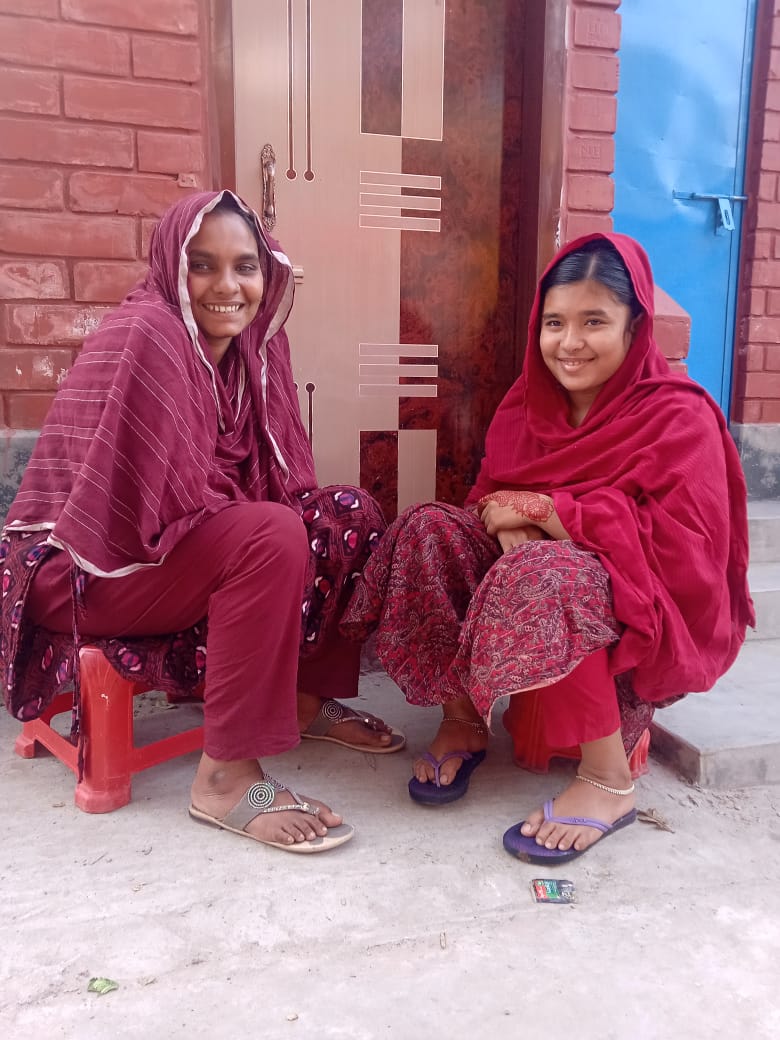
Mother-Teacher will also teach 5 other mothers in their slum area, so the community changes as mothers work together for the common good. Volunteerism expands and the community becomes stronger and focused. Surprising to the male population mothers go into business together or with their husbands, a new phenomena. Women become involved in activities and look for ways they can assist in things that improve their communities. Tanyss noted that just like Zig Ziglar’s wisdom, ‘If you are committed to changing your community, nothing can stop you’. In the slum, mothers have stepped in to help their neighbours, like looking after their children while they go to work. They connect with women in their own communities and it builds strength in the community.
When mothers step into the school, they learn it is against everything they have learned in their lives. They have to think outside of their very small box, a box they did not know they were in, and into this new place which is beyond imagination. Until surprisingly it is imaginable. Their history of understanding life has given way to new and appreciated understandings. Things they no longer need, they hang on a wall so others can take advantage of what is valued and worthy - they gave it away. Who knew this was possible. Learning has opened the door and the world. Mothers-teachers begin to adopt aging homeless women and support them with kindness and dignity and ultimate survival
Amarok recently stepped into Uganda, where Rotary is very involved with the program of establishing of Mother- Teacher School and micro schools. Rotary involvement is not so in Bangladesh or in India where there is support but not the visible active support experienced in Uganda.
In closing her presentation Tanyss expressed appreciation for the continuing support they receive from Regina Eastview and she is looking forward to a visit in the future.
Thank you Tanya Monroe for this ZOOM visit and sharing your Thank you for the work you do and for the leadership you provide to struggling communities working to improve their situation.